1.
hello hello!
2.
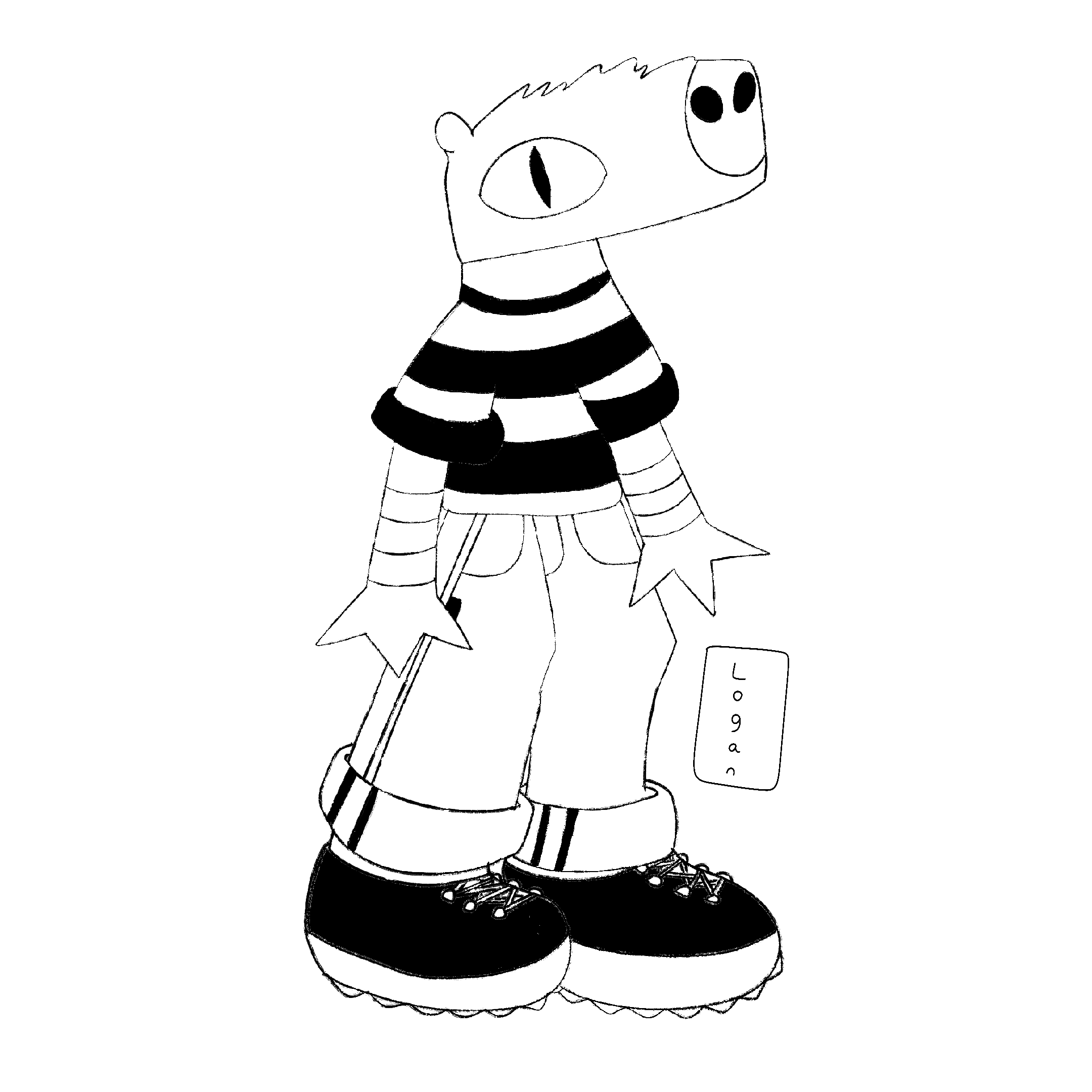
I'm Logan, a uni student and hobbyist game dev,
on a journey to make my first indie game as cereal box toy
interactive.
3.
I'm an artist, coder, and writer, based in the uk. And when it comes to making art, coding, and writing...
4.
...I'm very much a generalist; I like to make things, and I like to learn
lots of new ways to make things!
5.
I've mostly built my skillset trying to make projects for a sense of fun and personal progression.
6.
I've coded 2D and 3D GLSL shaders, written a dystopian sci-fi novella, and made animations frame by frame in 2D,
7.
but indie game dev only recently became something that felt in reach for me when I realised I wanted to coalesce making art, coding things, and writing, into one big project,
8.
and also realised that I have the skillset now to potentially make it happen.
10.
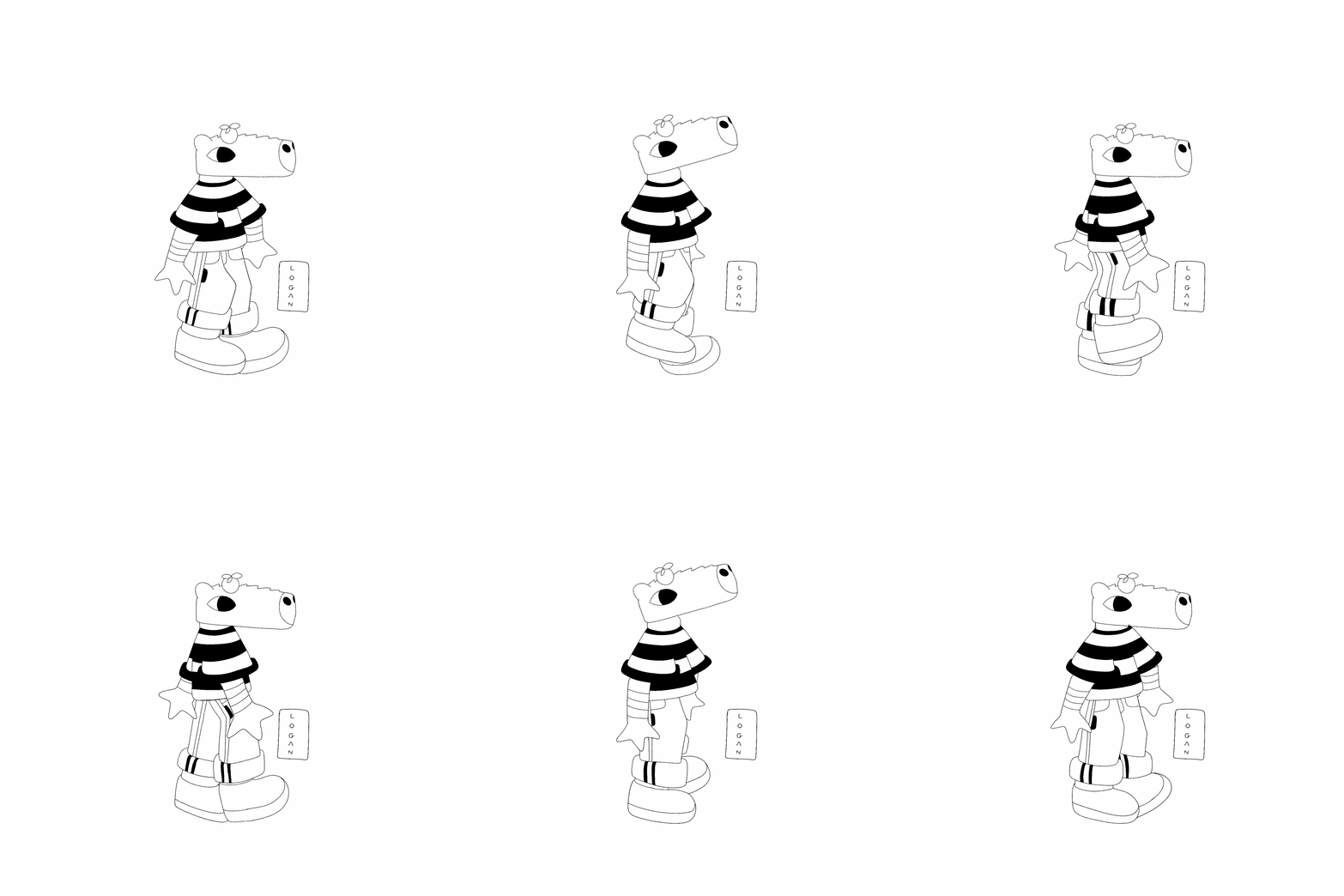
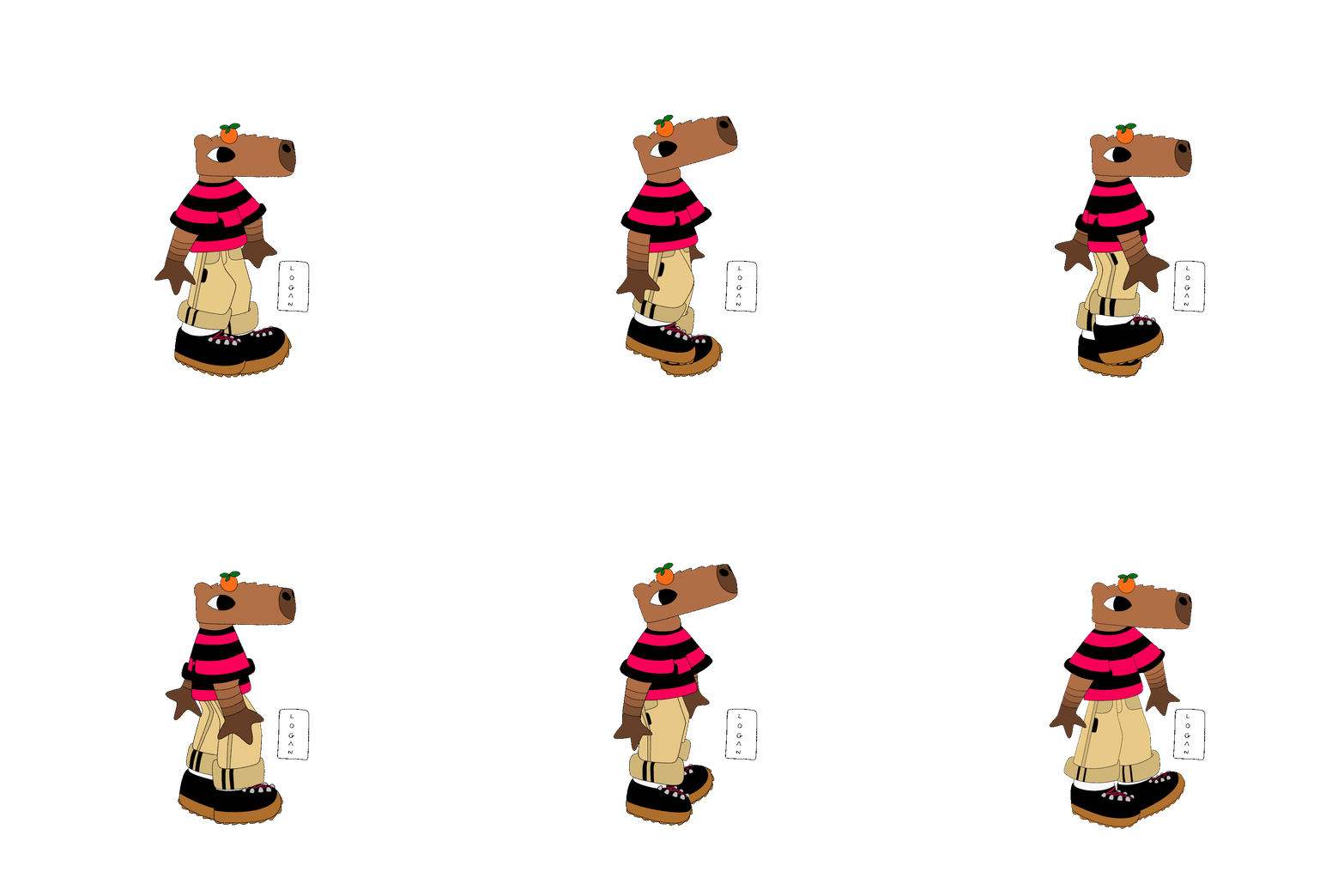
Keep follows the quest of Pym (pronounced like the dutch shortform for William, Pim! :]), a capybara assigned a village's
imperative request; to journey to keeps of dragons, dragons that keep
stealing the village's things, and get the stolen items back.
11.
12.
Pym is a polyglot, skilled in many languages, but the village is
particularly interested in their main linguistic expertise: the
ancient tongue of dragons.
13.
but after arriving, Pym is faced with a problem. the dragons have not
just stolen items at random; the tchotchkes they hoard have been
specifically chosen according to their specifics.
14.
in addition to this, the very first collection of things stolen, are not things at all, but creatures.
they are to find the first dragon they meet is hoarding pet cats, and why?
15.
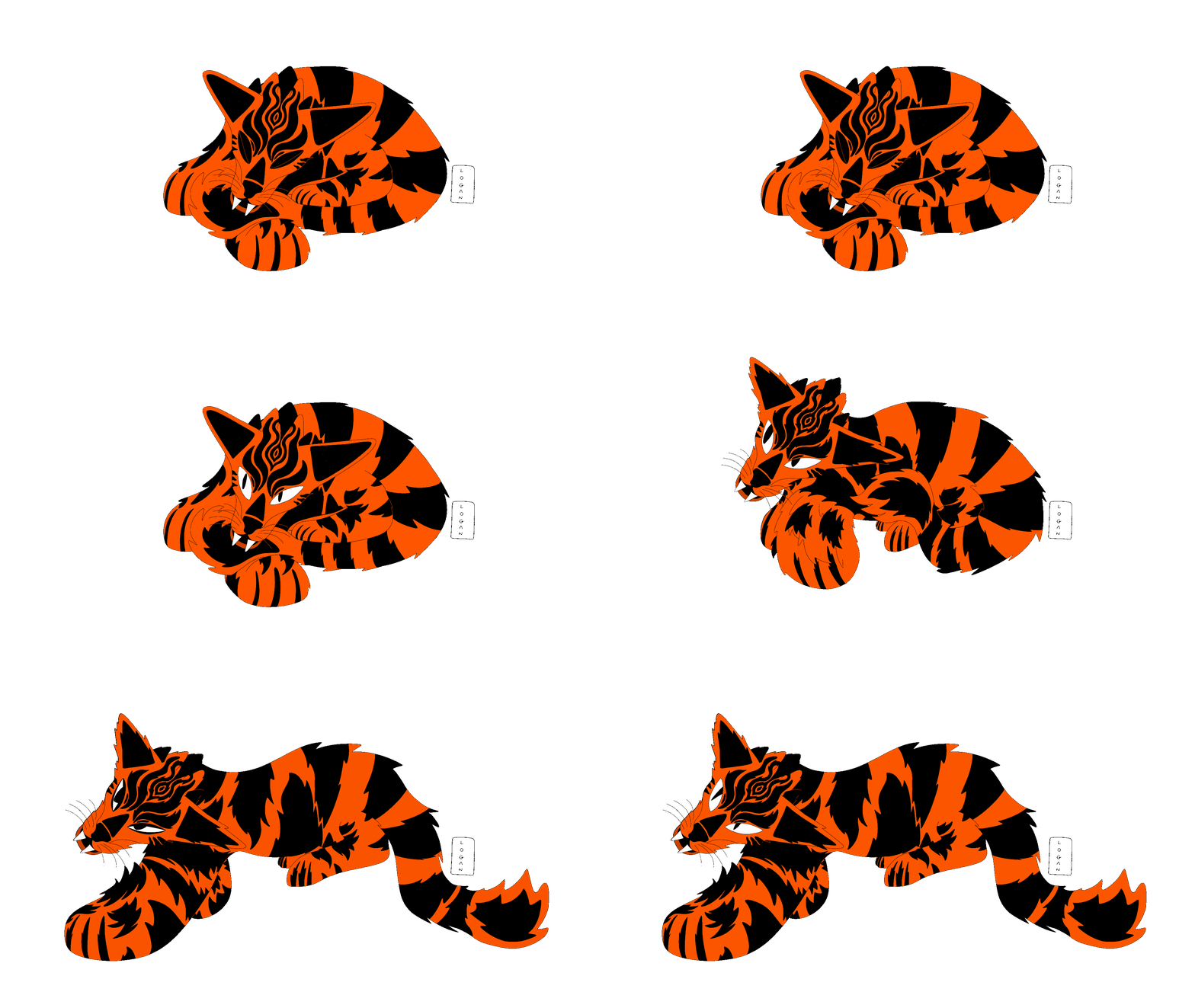
said dragon in question, Sol,
is terrified of mice!
the huge mice that occupy the ridges of the mountaintop he lives on!
and he's not letting the cats go, not until the mice have moved on!
21.
some text about the more technical parts of indie game dev for anyone interested in the creation of video games:
22.
it's been super fun working in Godot Engine, and animating everything (frame by frame, which is like, drawing by drawing) in Procreate.
it's really funny actually, I first tried to make a game in Unity years ago,
successfully made a single tree, and quit the project because I couldn't work out how to make a sphere roll around.
(I was a teenager and C# was not for me at that point in time because, it was just way too difficult.)
23.
some info about beginner coding languages to progress to indie game dev with, because it's something I rarely see talked about.
I oddly enough recommend GLSL as a beginner language, even though it can be complex at times, or perhaps I could give a more sensible recommendation of C and an Arduino and a good beginner Arduno electronic engineering book.
- GLSL is a great beginner coding language for anyone who thinks visually, and doesn't have a sensitivity to flashing images.
- colours can cycle very fast with GLSL when you start out, and run into values too far out of scope. very strobe-y and not the best for everyone.
- I like the The Book of Shaders tutorial website for GLSL if you are interested in it.
You can find it here:
thebookofshaders.com
- I'm also in the process of making a GLSL 3D shader tutorial for game dev and coding beginners that goes over a lot of 2D shader fundamentals.
You can find it here:
cerealboxtoyinteractive.com/graphicscoding
- if you like the idea of robotics, Arduino is likely a good match.
- Arduino is very fun for anyone who likes merging the virtual and the physical.)
24.
anyway, I moved across to Godot from Unity because Godot had an animation feature where you can just play an animation you've made.
and yes that feature is now deprecated and I have to do everything with individual frames.
but it's a good engine for me, I like it a lot,
I like Godot's scripting language a lot too. I really recommend it.
25.
I'm interested in potentially releasing some beginner indie game dev tutorials,
so things like 2D frame by frame animation, 3D shaders, building easy parallax skyboxes from 2D background layers. Stuff like that. :]
26.
I don't yet have any semblance of a release date, but I'm pretty set on wanting to release a free demo, as I progress through the project.
27.
I'm so excited to get back to animating more Sol being grumpy.
28.
(I have such a long way to go, so if anyone is actually excited about the potential of this, thank you for your patience.)